

Publications
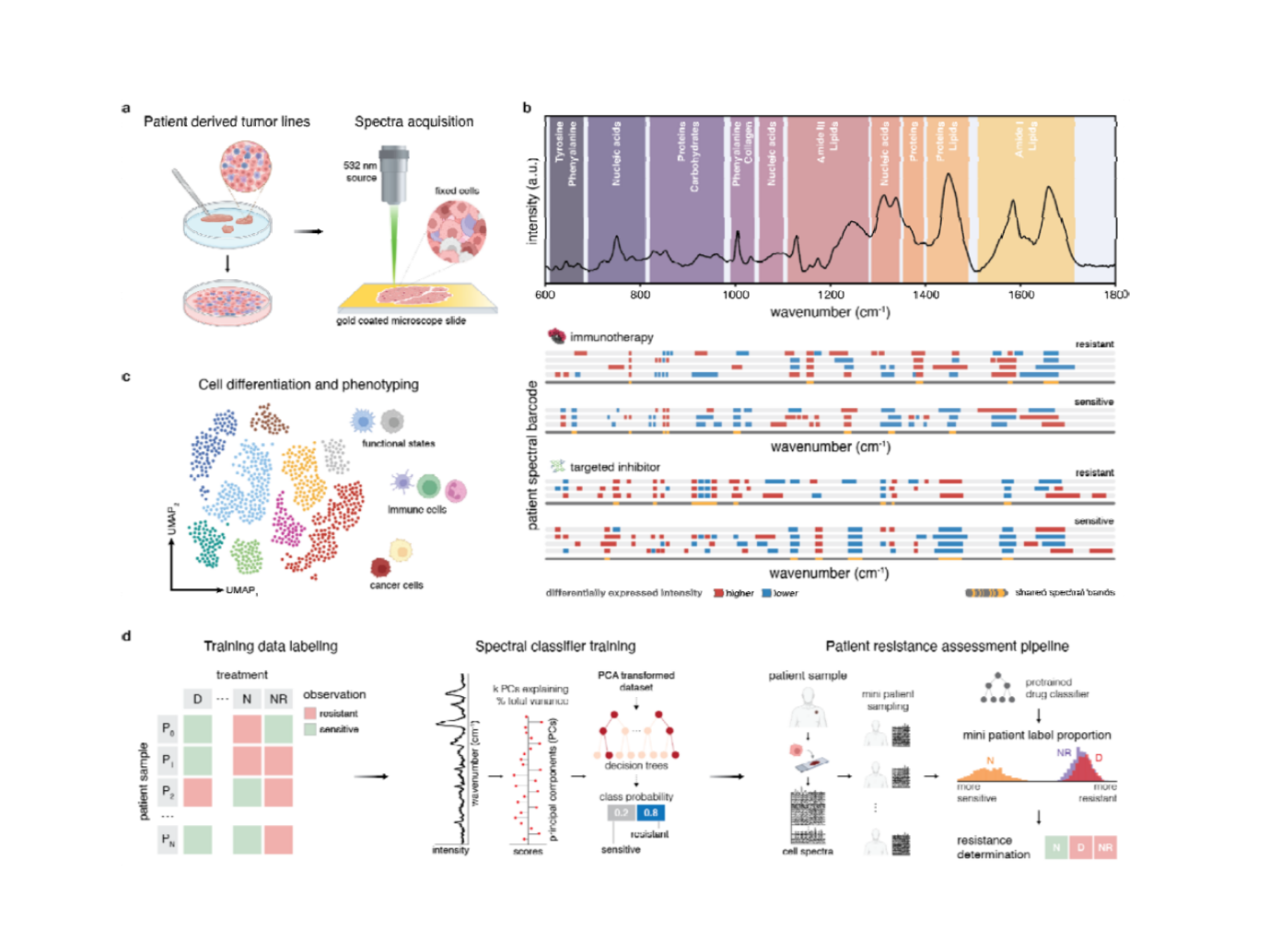
Predicting targeted- and immunotherapeutic response outcomes in melanoma with single-cell Raman spectroscopy and AI
Collaborating with Stanford, Pumpkinseed co-founders Nhat Vu and Jennifer Dionne demonstrate that single-cell Raman spectroscopy and AI can predict melanoma treatment resistance with 91% accuracy across patient-drug combinations.
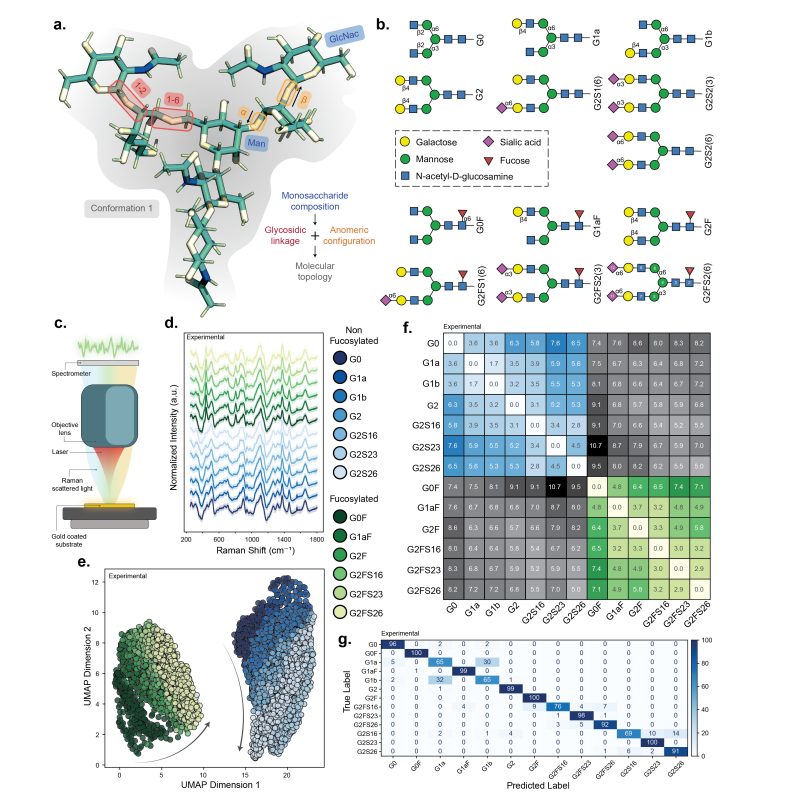
DynaSpec: Metadynamics and Raman Spectroscopy for Glycan Structure–Spectrum Mapping
Pumpkinseed co-founder Jack Hu, intern Varun Dolia, and Stanford Professor Jennifer Dionne are co-authors on new research introducing DynaSpec, a computational framework that maps the relationship between molecular structure and Raman spectral signatures — achieving over 85% classification accuracy across 13 closely related glycan structures. The work advances the scientific foundation underlying deSIPHR's ability to read complex biomolecules directly from their vibrational fingerprints.
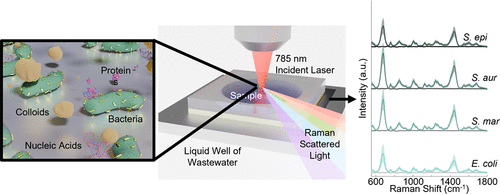
Bacterial Wastewater-Based Epidemiology Using Surface-Enhanced Raman Spectroscopy and Machine Learning
Stanford and Pumpkinseed use single-cell Raman and ML to detect bacterial pathogens in wastewater. This proof-of-concept work establishes that Raman can be used to detect biothreats without amplification for wastewater-based epidemiology.
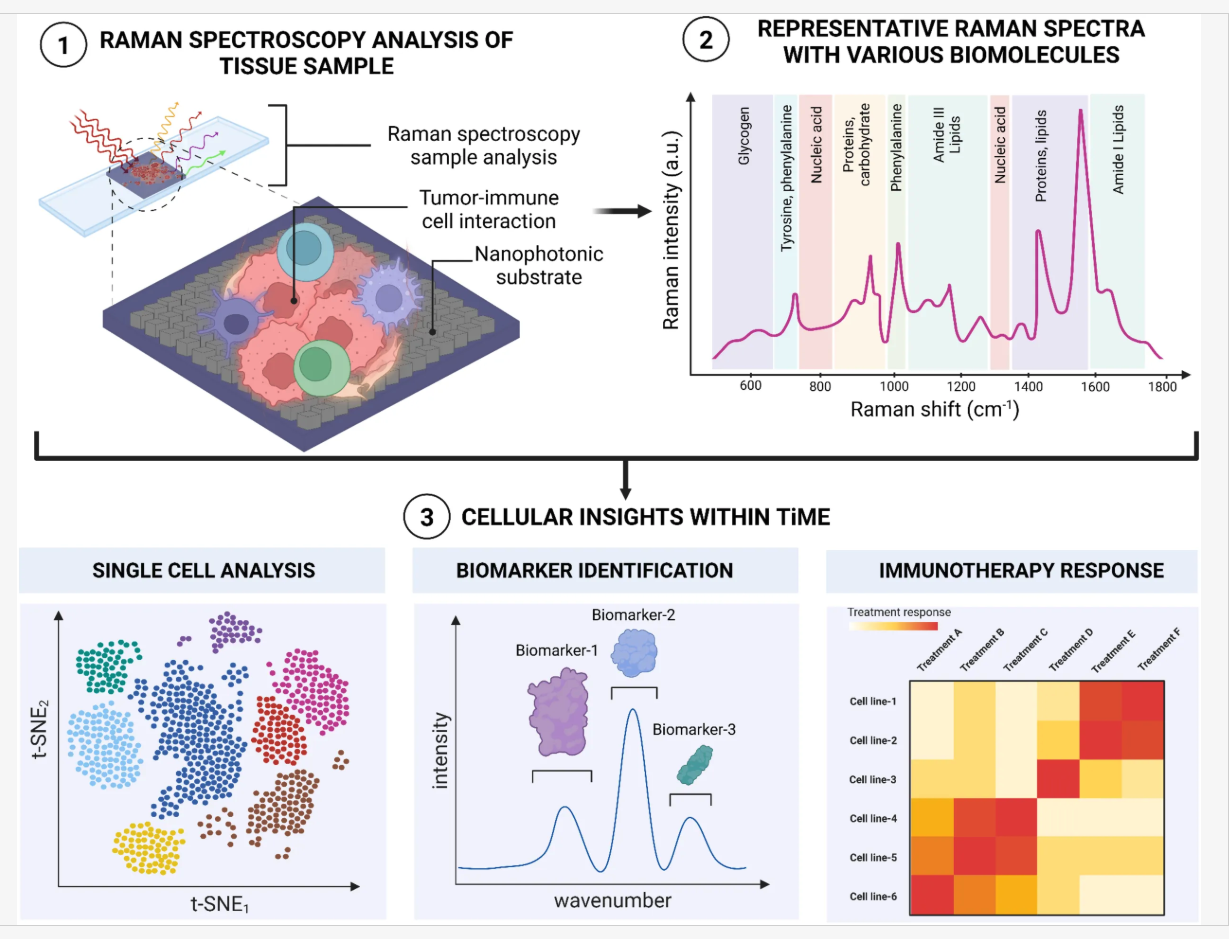
Advancing precision cancer immunotherapy drug development, administration, and response prediction with AI-enabled Raman spectroscopy
Pumpkinseed Bio's nanophotonic platform is unlocking a new era in precision cancer immunotherapy — enabling label-free, AI-powered tumor profiling at the single-cell level.
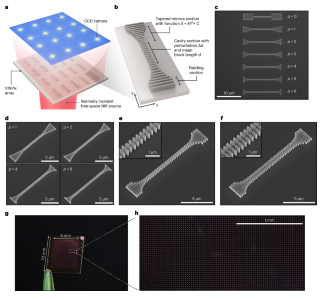
Very-Large-Scale Integrated High-Q Nanoantenna Pixels (VINPix)
Pumpkinseed and Stanford researchers have built a silicon nanoantenna array that breaks a longstanding optical trade-off — enabling ultra-precise, chip-scale light control for next-gen sensing, imaging, and computing.
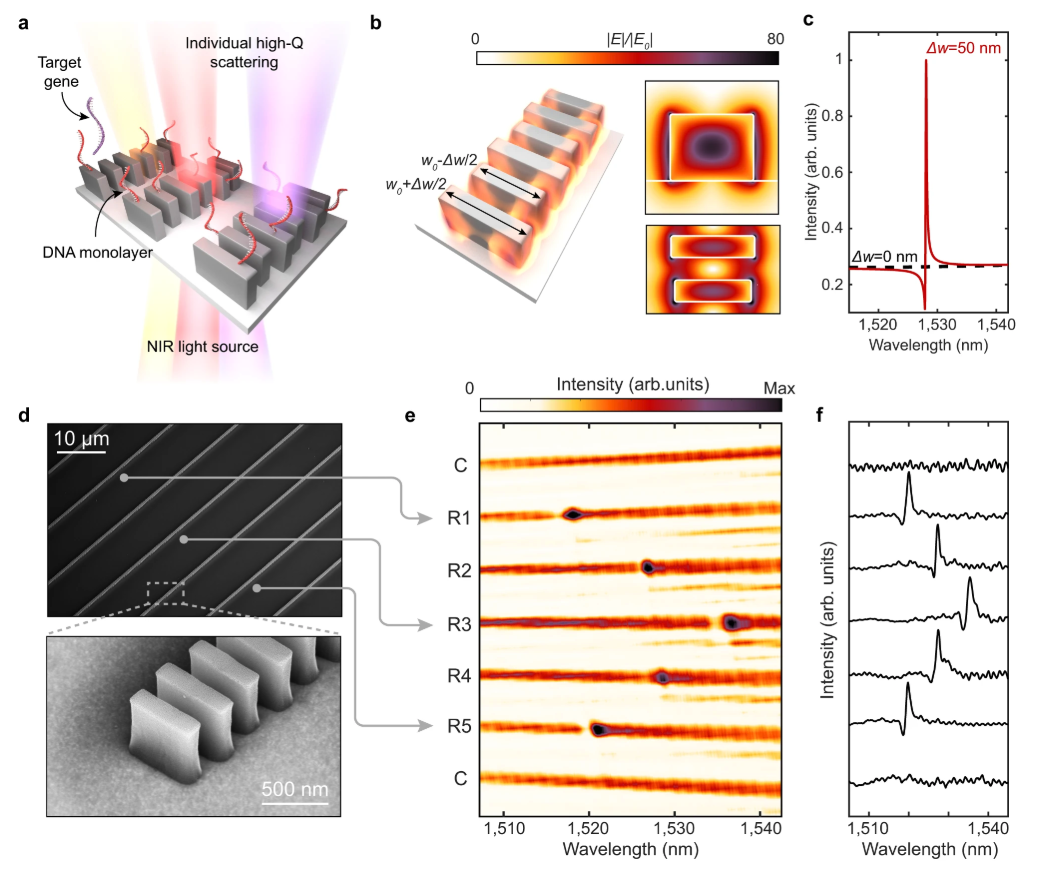
Rapid genetic screening with high quality factor metasurfaces
Pumpkinseed co-founder Jack interfaces high-Q resonators with molecules to detect COVID-19 genetic fragments in minutes — no amplification needed. This label-free platform could redefine rapid, compact diagnostics for disease and beyond.
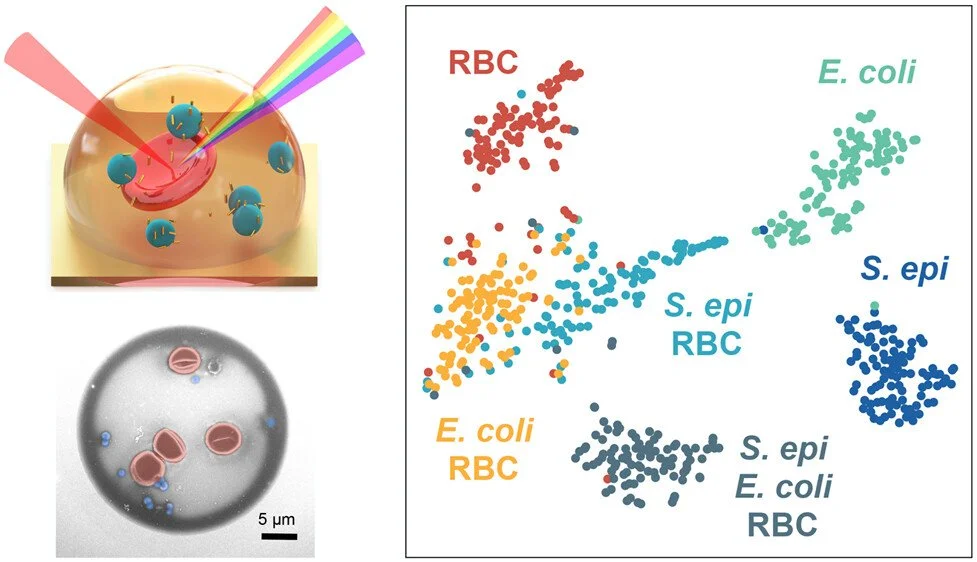
Combining Acoustic Bioprinting with AI-Assisted Raman Spectroscopy for High-Throughput Identification of Bacteria in Blood
Pumpkinseed and Stanford researchers used an acoustic bioprinter to split complex fluid samples into millions of micro-droplets, then used AI-powered Raman spectroscopy to identify pathogens with 99% accuracy — even in blood.